
Addressing the Underrepresentation of Female STEM Lecturers in Leadership in Technical Universities in Ghana
A GOING GLOBAL PARTNERSHIPS PROJECT

About the Project
Our main aim is to give voice and develop the skills of a small group of female stem lecturers in Ghanaian technical universities who work in different disciplines and who have experienced difficulties in securing a leadership position due to their limited research output.
The ‘Addressing Female STEM Lecturers’ Underrepresentation in Leadership in Technical Universities in Ghana’ project (January 2025 – March 2026) is a qualitative study, with an interdisciplinary scope, led by, co-designed by and with the participation of female Global North and South scholars.
The project draws on the collaborative partnership between the School of Education at the University of Nottingham (UoN), Ho Technical University in Ghana and the Association of African Universities (AAU) and is supported by funding from the British Council’s Going Global Partnerships programme.
Objectives
This project aims to:
- explore the experiences of female STEM lecturers in Ghanaian Technical Universities in attaining a leadership position;
- identify the macro and micro level processes that perpetuate the inequities they face in academia;
- examine the impact of capacity- building strategies, including writing workshops and mentorship, in addressing gender-based obstacles and
- put forward recommendations to redress disparities and achieve gender equity in technical universities in Ghana.





Impact
The project is designed to primarily benefit women by addressing the barriers hindering their career advancement in STEM fields within Ghanaian Technical Universities. Some of the expected benefits include:
- increased leadership opportunities
- enhanced research and career development skills
- greater visibility and recognition within their institutions, and
- amplified voices in shaping policies that promote gender equality.
The project could also lead to more equitable distribution of resources and opportunities in Technical Universities in Ghana, greater diversity in decision-making processes, and a shift towards a more collaborative and inclusive academic culture.
Our Approach
Writing for Publication
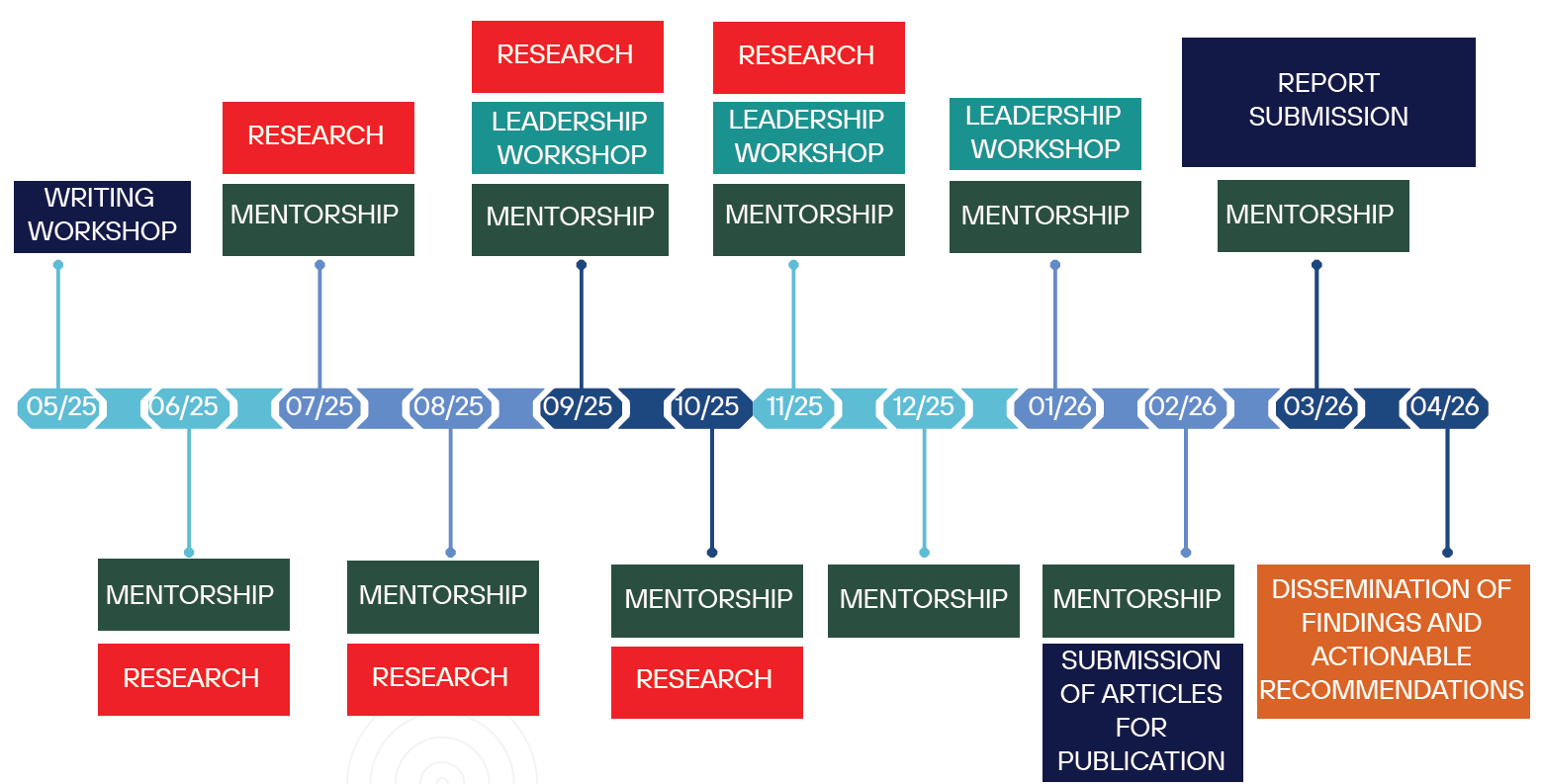
The project incorporates a two-day writing workshop designed to address the challenges female STEM lecturers face in conducting research and publishing their findings, which can impede career progression. This workshop offers targeted
training on writing for publication. It empowers female STEM lecturers to enhance their writing skills, increase their research output, and gain greater recognition for their work.
Mentorship
The project includes a 10-month
mentorship component to address the lack of access female STEM lecturers may have to female mentors and professional networks. The mentorship program facilitates connections and a supportive network, enabling participants to share experiences, build connections, and learn from each other’s successes.
Leadership Skills Workshops
The project incorporates three online leadership skills workshops. These workshops are designed to equip female STEM lecturers with the skills needed to advance their careers and assume leadership roles.
Research
The project’s research component employs qualitative interviews to identify the barriers that disproportionately impact female STEM lecturers. This research aims to uncover the specific obstacles hindering their advancement and participation in leadership roles.
Actionable recommendations
Following the identification of barriers through qualitative interviews, the project will formulate actionable recommendations. By understanding these obstacles, the study can inform targeted interventions and policy changes to promote access to leadership for female STEM lecturers in Technical Universities in Ghana. These recommendations will aim to address gender inequalities and promote systemic transformation within Ghanaian Technical Universities. The goal is to create a more equitable environment where female STEM lecturers can thrive and advance into leadership positions.

Timeline (Month/Year)

Meet the Team

DR ALICIA BOWMAN
PRINCIPAL INVESTIGATOR/MENTOR
Bio
Dr Alicia Bowman has over 20 years’ work experience, which combines a researcher profile with teaching and training experience. Her research is interdisciplinary and is strongly situated in the field of gender studies. Her research interests include gender, women’s empowerment, research capacity strengthening, migration and the expansion of students’ capabilities through socially- just pedagogies. Her current research focuses on gender inequalities in knowledge production and dissemination in Higher Education Institutions in Sub- Saharan Africa.

PROFESSOR JULIET THONDHLANA
PROJECT DEPUTY/MENTOR
Bio
Professor Juliet Thondhlana has wide-ranging experience teaching, researching, and publishing and is a member of several editorial boards. She has led and managed both small and large impact projects in Sub- Saharan Africa including Ghana, Kenya, Nigeria, South Africa, Uganda, and Zimbabwe on topics such as gender
and education; decolonisation; organisational and research cultures in universities in Africa; research and grant
writing and publishing in Africa; refugee education; educational policy development; entrepreneurship and internationalisation of education and development. She is also the UNESCO Chair in International Education and Development, the Coordinator of the Association of African Universities Europe Regional Office.

DR LITICIA EFFAHMANU
CO-INVESTIGATOR
Bio
Dr Liticia Effah-Manu holds a PhD in Food Science and Technology from the Kwame Nkrumah University of Science and Technology and is a Faculty member at the Department of Food Science and Technology, and the Gender Affairs Officer of Ho Technical University. She was a Research Fellow of the International Institute of Tropical Agriculture (IITA) Nigeria during her PhD studies (2017- 021). Dr. Effah-Manu has broad research interests in Gender and Food Systems, Food Chemistry, Nutrition, Sensory Science and a keen interest in Gender Studies. Her dream is to realize nutritional security for the Sub-region through her research and create a positive and lasting impact on the lives of girls and women, helping them achieve their aspirations of economic empowerment and career leadership.

DR FELICIA NKRUMAH KUAGBEDZI
CO-INVESTIGATOR
Bio
Dr Felicia Nkrumah-Kuagbedzi holds a PhD in ICT Education with specialization in Cybersecurity from the prestigious World Bank-sponsored Africa Centre of Excellence for Innovative and Transformative STEM Education (ACEITSE) at the Lagos State University in Nigeria. Her research focus is on investigating effective pedagogical approaches for ICT Education, with a particular emphasis on developing innovative and inclusive teaching methods and promoting digital literacy. Dr Nkrumah- Kuagbedzi is a passionate advocate for women’s advancement in higher education and is one of the founding members of the African Women in Higher Education Network, hosted by the Association of African Universities. She has co-authored articles focused on women advancement, including one published by the University World News. Currently, she works at the Association of African Universities and plays varied roles, including serving as the Senior Communication and Publications Officer for the AAU, and the Project Officer for a Science Granting Council’s Initiative project funded by the International Development Research Centre (IDRC) Canada, which involves 17 countries across Eastern, Western, and Southern Africa.
News & Resources
Hello world!
Welcome to WordPress. This is your first post. Edit or delete it, then start writing!
Got any Questions for us?
Please contact the project team at:
- Dr Alicia Bowman (Principal Investigator): Alicia.Bowman@nottingham.ac.uk
- Professor Juliet Thondhlana (Project Deputy): Juliet.Thondhlana@nottingham.ac.uk
- Dr Liticia Effah-Manu (Co- Investigator): leffah-manu@htu.edu.gh
- Dr Felicia Nkrumah-Kuagbedzi (Co-Investigator): fnkrumah@aau.org